St John’s Wood & its neighbourhoods
Painting Hamilton Terrace doors, sashes and fanlights
Joinery on Hamilton Terrace is not one pattern. Early houses have round-headed doors and windows. A later illustration shows a flush door with a canopy. The specification says which.
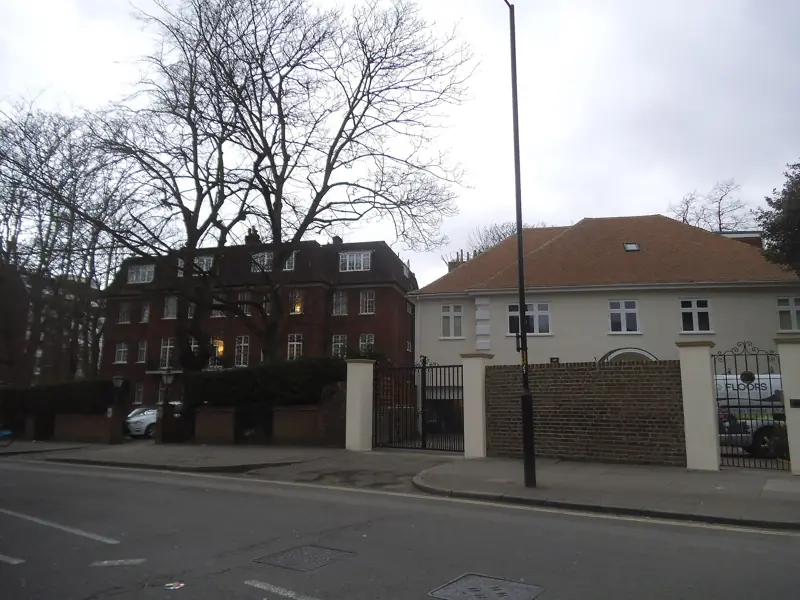
Round-headed openings on the early terraces
The plain yellow stock terraces of c.1830 are simple on purpose. Their decorative additions are round-headed doors and windows, a wrought-iron balcony and stucco basements. The balcony and the basement are exterior masonry and metal. The round-headed door and the round-headed window are joinery. A brief that says 'paint the woodwork' still has to admit the head is curved. The lining, the fanlight and the sash head follow that curve. Paint built up in the head stops the sash and hides the join. It is taken back where it has failed, without sanding the moulding into a plain arc. The audit also says round-headed windows appear more frequently in the south of the conservation area and in particular on Hamilton Terrace. So a southern house on this street is a likely place to find that shape, not a guarantee that every window on the street is round-headed. The survey counts the heads. It does not assume the terrace is Georgian-uniform from end to end. The street is, the audit says, too long and too varied for that.
A 1930s flush door on the same street
The audit illustrates a 1930s flush door with a projecting canopy above, on Hamilton Terrace. That door is a different object from a round-headed panelled door. A flush leaf has no raised panels to pick out. The canopy is a separate surface, often the part that fails first because water sits on it. Specifying 'the front door' without saying flush or panelled, and without saying whether the canopy is included, is how a quotation goes wrong on this street. Across the conservation area, typical front doors are painted black, with occasional changes to other colours, and fanlights are simply detailed, generally rectangular, with some semi-circular versions mainly in the southern section. Semi-circular fanlights and round-headed doors are the southern pattern the audit is pointing at. A rectangular fanlight over a later flush door is just as possible here. We paint the fanlight that is there. We do not replace a semi-circular light with a rectangular one as part of decoration, and we do not strip a painted door for stain. On a listed building, Westminster says painted doors should not be replaced by stained or varnished ones.
Sashes, bars and which face is in the job
Six-over-six sashes, often with margin lights, are the most common glazing-bar pattern in the conservation area. Hamilton Terrace is inside that area, and the early windows are part of the round-headed story as well. A sash has an outside, an inside, meeting rails, a cill and staff beads. This page is about those faces when they are named. The outside can travel with the exterior decoration. The inside can travel with the room. The frame is joinery either way. Margin lights are thin bars. They clog if the paint is heavy, and they are masked rather than cut in with a wide brush. Putty is repaired where it has failed, before a finish is discussed as though the glass were safely bedded. Ironmongery is masked or removed and refitted. Regular painting is what the audit says prevents decay of doors and windows. Leaving a cill until the timber is soft is the opposite of that maintenance. If the cill has already gone soft, that is a repair to identify, not a coat of paint.
Lead paint, listed doors and the order of work
Old joinery paint is treated as lead-bearing. Pigments were widely used until the 1960s. Blow lamps and gas torches are not used. Dry sanding is avoided because it makes lead dust. Sound paint stays. Only flaking, chipping or dusting paint is taken off. Preparation aims at a sound edge for the new film and at keeping the profile of a round head or a glazing bar. In an occupied house the door has to close every night, so a front door is taken off only when that has been agreed, and a flush door with a canopy is staged so the opening is not left without a secure leaf. Windows are worked so that a room can still be ventilated. Internal painting of a listed house is generally not controlled. The door, if it is external and the change is from paint to a stripped finish, is the item the listed-building note resists. Like-for-like repainting of an already painted door usually sits in the easier case. We write which case we think it is, and we do not start a strip-off while that is open.
What changes the cost of the joinery
Curved heads take longer than square ones. A canopy over a flush door is an extra surface with its own preparation. Margin lights and meeting rails are slow. A decayed cill is repair before paint. Counting only 'the front door' and forgetting the fanlight, the frame and the inside face is how scopes collapse. Access to upper sashes on a wide plot may be from a garden or may need scaffold. Lead-safe methods take more care than a modern factory-finished door. Occupied rooms change how many windows can be open at once. None of those is a price. After the visit the quotation lists each door and each window face, the canopy if there is one, repairs, and access. Exclusions are just as important: the stock brick, the balcony iron if it is in the exterior schedule instead, and any window the lease does not let you paint. Send close photographs of the door head and of one sash meeting rail.
Questions about Joinery and sash windows
What door and window shape does the audit give the early terraces?
Round-headed doors and windows, with a wrought-iron balcony and stucco basements as the only decorative additions on the plain c.1830 yellow stock terraces. Round-headed windows are more frequent in the south and on Hamilton Terrace in particular.
Is every door on the terrace round-headed?
No. The audit also illustrates a 1930s flush door with a projecting canopy on Hamilton Terrace. The quotation needs to know which door it is, and whether the canopy is included.
Should a painted door be stripped and stained?
Westminster's listed-building guidance says painted doors should not be replaced with stained or varnished doors. Repainting a painted door is the maintenance the audit asks for, so that the joinery does not decay.
Related reading
Adjoining streets and wider work
Where a sash needs joinery repair as well as paint, that wider work sits with Hampstead Renovations.
Request a quotation
Tell us about your property.
Share the address, the rooms or surfaces, and what you have in mind.
Your project details
Tell us what you would like to decorate and where.