St John’s Wood Painters & Decorators
Colour & finish planning
The palette belongs to the rooms you already have in St John's Wood. Start with the permanent materials and let the colour decisions develop around them.
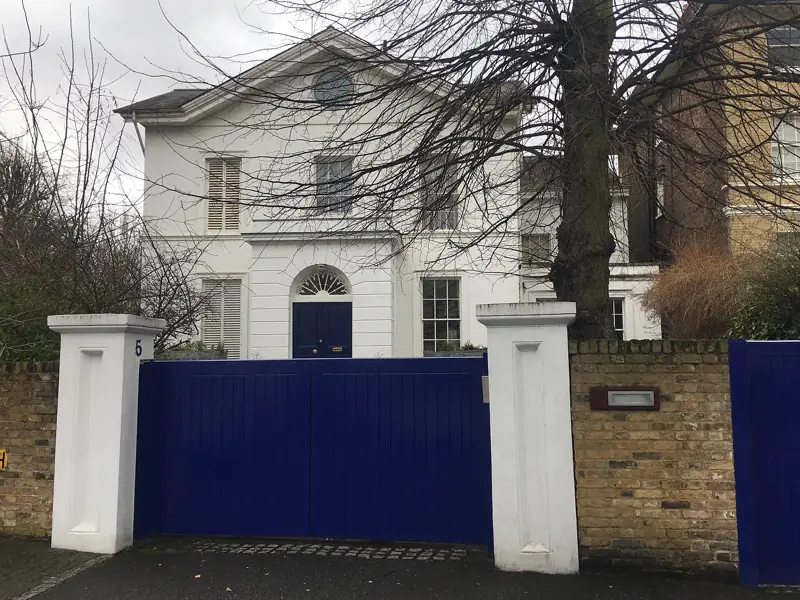
Begin with what stays
Flooring, stone, timber and large pieces of furniture give a scheme its starting point. Bring those references to the discussion alongside photographs taken in natural light. Make a short list of the qualities you want from the room, whether quiet and tonal or more defined, without committing every surface to the same treatment.
Test a relationship, not an isolated colour
Place wall and joinery samples next to each other, then compare them with the ceiling and neighbouring room. Review the boards during the day and under your usual evening lighting. Screens and printed cards are useful for narrowing a choice; physical samples are the more useful reference when agreeing the scheme.
Give each surface a complete specification
A colour name alone is incomplete. Record manufacturer, product, colour reference and sheen for walls, ceiling and woodwork separately. Include the intended preparation and check the technical information for the surface and use. Discuss practical priorities such as cleaning, wear and any existing coating that must remain.
Take exterior colours through the right checks
Keep outside and inside selections separate. Historic England advises checking whether an exterior change to a listed building needs permission and whether local conservation controls apply. Review external samples and any required advice before purchase. A colour that works visually still needs to be appropriate for the particular surface and property.
Daylight, evening lamps and a sample left in the room
A colour is a relationship with the light that room actually has. North-facing glass, a garden reflected off greenery, and a street window opposite a pale stucco front will all shift the same card. Bring photographs taken in the day, and look at samples again under the lamps you use after dark. Leave a board up for more than a glance. A sample that pleased you at noon can look heavier once the ceiling light is the main source. Large boards are more honest than tiny chips, and they should sit beside the floor, the stone and the timber that are staying. Move the board from the window wall to the darkest corner. If two rooms are seen together through an open door, test the pair, not each room in isolation. The decision that goes into the specification is the physical sample, marked with the product and the sheen. In a villa, garden light on a rear room can differ from street light on the front, so do not carry a front-room approval to the back without looking. A flat hall may never see the same sky, and it should be chosen for itself.
Matt, eggshell and a sheen decided surface by surface
Sheen changes the colour you think you chose. A matt finish sinks the pigment and shows scuffs one way; an eggshell or a satin lifts the colour and shows undulation in the plaster another way. Ceilings are often calmer a step flatter than walls. Joinery often wants a harder film than the wall beside it, because hands, bags and cleaning reach it first. Write those as separate lines: wall, ceiling, woodwork, and any fitted furniture. The product has to suit the substrate and the existing coating. A finish recommended for interior walls is not automatically a finish for a sash cill or for a steamed kitchen. Read the technical sheet for preparation, recoat and cure, and for what the maker says about cleaning. If the room is a working kitchen or a narrow hall, say so, because washability may matter more than a perfectly dry look. Dark colours show marks and missed cuts more readily, which is a reason to be precise at the architrave. Pale colours show batch differences, and a difference between wall and ceiling, more readily. Keep one labelled sample of each agreed finish.
A palette that is allowed to change at the doorway
Whole-home schemes fail when every room is forced into one colour for the sake of consistency. Decide where the thread runs and where it stops. A hall can bind the rooms with a joinery colour while the walls change. A staircase can carry one wall colour past several doors without those rooms matching each other. Exterior colour stays on its own schedule. Historic England advises checking whether an external change on a listed building needs permission, and whether local conservation controls apply. An interior approval is not an exterior approval. On the St John's Wood villa streets, brick and stucco already give the outside a material pattern; the paint colour has to respect what is coated and what is not. Inside, compare a proposed wall with shutters or a handrail that are staying, and say whether those timbers will be painted at all. For a flat, keep shared landings and the building's entrance door out of the private palette unless the lease and the managing agent put them in the work. Record exclusions as clearly as choices. The finished note is a list of references by room and by surface, plus the samples.
Sources: Historic England: advice on redecoration; Westminster: St John's Wood conservation area audit
Choosing colour in St John's Wood: terraces, Abbey Gardens and solvents
In St John's Wood, stucco is generally painted in a limited range of shades. The audit says that limited range avoids the disruption contrasting colours cause to terraces and groups. A sample that fights the rest of the terrace is the outcome this guidance is written to prevent.
Under the Article 4 Direction for Abbey Gardens, painting a building's street-facing exterior, other than the door, needs planning permission. If the address is covered, the external colour is not chosen on site and then painted. The door is the exception the direction names.
Westminster's stucco guide recommends BS 4800 colours 10B15, 08B17 or 08B15 for external stucco, the choice depending on the predominant shade of the terrace or group. Those three references go on a sample board and are compared with the neighbouring fronts.
Historic England lists a change of paint finish, from matt to gloss, from smooth to textured, or from limewash to paint, as a change that would usually need listed building consent. On a listed front, sheen is part of the specification, not a detail left to whichever tin is open.
The VOC Regulations 2012 set solvent limits by product category, including a separate category for coatings for exterior walls of masonry, brick or stucco. An external masonry coating is checked against that category rather than treated as if it were an interior wall paint.
Sources
- Westminster City Council, St John's Wood Conservation Area Audit
- Westminster City Council, Stucco: A Guide to Care and Maintenance
- Historic England, Listed Building Consent (Historic England Advice Note 16)
- The Volatile Organic Compounds in Paints, Varnishes and Vehicle Refinishing Products Regulations 2012, Schedule 1
How to ask for a colour-planning quotation
Send daylight photographs, a note of the surfaces that must stay, and any sample you already own. If an elevation is part of the same message, put it in its own paragraph. Use the contact page to start that conversation before a decorating date is discussed.
Questions about Colour & finish planning
What does colour and finish planning include?
Planning decides which colours stay, which change, and which sheen goes on a wall, a ceiling, a door and a trim in your St John's Wood rooms. Samples are seen in daylight and under the lamps you use at night. Painting and paper hanging are separate services. They use the note this one produces. If every product is already chosen, send the references and the work can be priced as decoration without this visit.
How is a sheen chosen for each surface?
Sheen is recorded surface by surface. A wall may be matt and a door eggshell, because the door is wiped. A ceiling can take another product. Manufacturer, range, colour reference and sheen sit with a sample seen in the room. Calling a surface white is not a specification, because two whites side by side will not match by hope. An outside colour on a St John's Wood elevation can need a permission check an interior sample does not give, and it stays provisional until that check is done.
What should I send before a colour conversation?
Send the address, daylight photographs, and what must stay: a floor, timber, a kitchen, or paper on one wall. List rooms seen in one view, including a hall or stair in the St John's Wood house. If an elevation is in the same enquiry, keep it separate and say whether listing or a conservation-area control might apply. Bring sample pots you own, and say which decisions are still open.
When does colour planning stop and decorating begin?
Planning stops when each surface has a product, a colour and a sheen, or when that surface is excluded. Painting, paper, joinery and exterior work then use the note. A sample rejected in the room changes the specification before booking, not during the first coat. Wallpaper needs its own product and a stopping line. An external colour not yet checked for consent stays off any start. The handover is a short schedule for the St John's Wood rooms.
Which external stucco colours does Westminster recommend?
The audit says stucco here is generally painted in a limited range of shades, so that contrasting colours do not disrupt terraces and groups. The stucco guide recommends BS 4800 10B15, 08B17 or 08B15, chosen to match the predominant shade of the terrace or group.
Does repainting a street front in Abbey Gardens need planning permission?
Under the Abbey Gardens Article 4 Direction, painting a building's street-facing exterior, other than the door, needs planning permission. On a listed building, Historic England treats a change of finish, such as matt to gloss, smooth to textured, or limewash to paint, as a change that would usually need listed building consent. Exterior masonry coatings also fall under the 2012 VOC Regulations, which set solvent limits by category, including coatings for masonry, brick or stucco.
Adjoining streets and wider work
Colour and finish planning for these houses and flats is also set out by Primrose Hill painters and decorators and Paddington painters and decorators.
Related services
In these parts of St John’s Wood
Request a quotation
Tell us about your property.
Share the address, the rooms or surfaces, and what you have in mind.
Your project details
Tell us what you would like to decorate and where.