The decorating notebook
Preparing a stucco or brick front for repainting in a conservation area
A new coat on a conservation-area front is only as good as the preparation under it. In St John's Wood that starts by deciding which part of the wall is allowed to take paint at all.
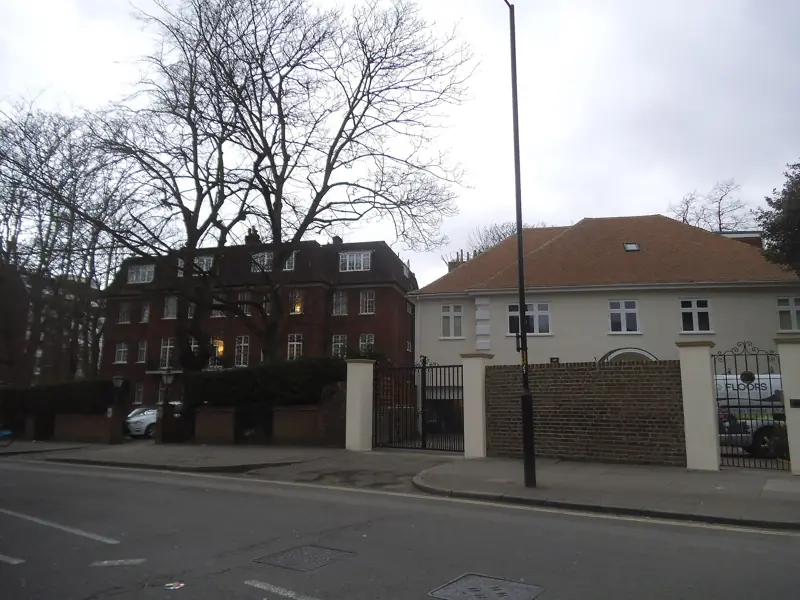
Decide the material before you buy the coating
Walk the elevation and mark three things: stucco or render that is already a coated surface, fair-faced brick, and dressings that might be stone or terracotta rather than paint. Abbey Gardens is the clear local lesson. The later terraces are yellow brick, half stuccoed. The stucco is prepared and recoated. The brick is not, because painting it would seriously disfigure the buildings. Hamilton Gardens is red brick with stucco only as detail, including pointed arches over the doors. Hamilton Close is yellow stock over timber doors. The stock is the wall you leave. If you are unsure whether a patch is paint, bare render or stone, do not wash it with a coating 'to see'. Photograph it and ask. A conservation area does not forbid maintenance. It does make a wrong material an obvious mistake, because the terrace repeats.
What to do with the stucco
Stucco fails by losing its key, by cracking at mouldings, and by holding water on ledges such as cornices and pediments. Preparation is local to those failures.
Find what is hollow
Tap the rendered face, the cornice soffit and the modelled dressings. A hollow sound means the coat has left the wall. Painting over it traps a piece that will fall later, often taking the new film with it. Hollow areas are cut back to a sound edge. The repair is a compatible render, brought out to the existing line, not a skim of filler proud of the moulding. On a palace front such as St Anne's Terrace the capitals and the pediment are where this matters most. On Abbey Gardens it is the pronounced cornice and the consoles.
Clean, and only then consider the film
Dirt, lichen and chalking stop a new coat gripping. Wash the surface and let it dry. A wall that is still damp is not ready, whatever the calendar says. Sound paint stays. Westminster's general approach, and the lead-paint guidance for older films, is that you do not strip for the sake of a bare face. You remove what is flaking, chipping or blown, and you feather the edge so the repair does not show as a ridge. You do not burn old paint off with a blow lamp or a gas torch. You do not dry-sand it into dust. Those rules are about lead, which was widely used in household paints until the 1960s, and they apply to painted mouldings as well as to doors.
Keep the profile
Consoles, pediments, pointed Gothic arches, Corinthian capitals and bottle balustrades are the drawing of the street. A thick, textured coating fills them. Westminster wants gloss or eggshell on stucco, not texture, and it warns against an excessively glossy finish that reads as a plastic skin. Brush or roller work should leave the arris of a moulding sharp. If a previous coat has already rounded the detail, do not add another heavy film on top and call it preparation. Taking a clogged moulding back is a slower job, and it belongs in the quotation as its own line.
What to do with the brick
Fair-faced brick is left fair-faced. That is the stucco guide's rule, and it matches the audit's dislike of brick painted above the ground floor. Preparation of brick, when the brick is not being painted, is still part of a careful job: open joints that are shedding onto a painted dressing can be pointed, vegetation in a joint can be removed, and the junction with the stucco can be masked so the new coating does not creep onto the headers. Pointing is not an invitation to smear mortar across the face. A mews of yellow stock and a High Street of red brick with stone dressings are both 'brick jobs' in which the paint is on the joinery and the dressings, not on the wall. If someone has already painted the brick, do not assume you should add another coat. Note it, and ask whether keeping that coating is maintenance of a previous alteration or a chance to stop. We will not promise to strip paint off a whole terrace. We will not extend the painted area.
Colour, sheen and the group
Once the surface is sound, the coating has to match the terrace, not only the chip you liked indoors. The stucco guide's BS 4800 suggestions, 10B15, 08B17 and 08B15, are there to help you meet the predominant shade. Hold a large sample on the wall in daylight, next to the brick if the front is only half stuccoed. A sample indoors will lie. On Abbey Gardens the Article 4 Direction means a change to street-facing paint, except the door, is a permission question for the numbered houses. Elsewhere, a dramatic contrast can still be the 'insensitive painting' the audit complains about, even when no direction is in force. Write the product type, the sheen and the surfaces on a note. Do not write 'white' and hope the decorator knows which white, and which surfaces stay bare.
Access while you prepare
Preparation at a cornice or a capital is done from a safe standing place, not from a ladder hooked on the moulding you are trying to save. Where anything could fall to people or vehicles, Westminster expects a protective fan. Scaffold on the pavement needs a licence. Tight streets such as Abbey Gardens, with frontages around 5.5m and little or no front garden, put that licence in the middle of the job. A villa garden gives you ground to stand on and plants to protect. A mews gives you setts and a shared arch. Wash-down water has to go somewhere that is not a basement area, a planted square or a granite channel. Cover those before the first bucket.
A sensible order
Repair, then wash, then the remaining failed paint, then the primer or mist coat the system needs, then the finish. Joinery and iron are masked until their own turn, so masonry paint does not seal a sash or a railing. The top of the elevation is done before the lower wall, so that later washing does not streak a finished bay. Rain stops the sequence. None of this names a brand or a number of coats. The specification does that after the wall has been seen. If the house is listed and the proposal is more than like-for-like, the sequence waits for advice. Starting the cut-out is not a neutral act if you have not agreed what will be coated.
Questions about Preparing a stucco or brick front for repainting in a conservation area
Can I paint the brick to avoid preparing it?
No. Fair-faced brick should not be painted. On Abbey Gardens the audit says painting the brickwork would seriously disfigure the houses. Preparation is for the stucco and the joinery, not a cover-up of the brick.
Should old paint be burnt off before a new system?
No. Lead pigments were widely used until the 1960s. Blow lamps and gas torches are ruled out, and sound paint is left. Only flaking or failed paint is removed, and not by dry sanding.
What sheen does Westminster expect on stucco?
Gloss or eggshell, not a textured coating, and not an excessively glossy finish. The shade should match the predominant colour of the terrace or group.
Related reading
- Exterior painting, including stucco and masonry
- Exterior painting on the half-stucco Abbey Gardens fronts
- Exterior painting on the red-brick Gothic terraces of Hamilton Gardens
- Exterior painting on the stucco of Alma Square
- The local guide to period homes in St John's Wood
- Railings and basement areas, prepared separately from the wall
Adjoining streets and wider work
Stucco and brick fronts of this kind also stand in the adjoining areas. See Primrose Hill painters and decorators and Paddington painters and decorators.
Where the elevation needs repair beyond decoration, that wider exterior work sits with Hampstead Renovations.
If damp or a defect in the wall is the reason a coating is being considered, that question can be taken to Hampstead Chartered Surveyors, our sister surveying and building consultancy firm.
Request a quotation
Tell us about your property.
Share the address, the rooms or surfaces, and what you have in mind.
Your project details
Tell us what you would like to decorate and where.